If you run takeoffs for a living, you already know where your week disappears. Counting fixtures. Scrolling a spec book to find one number. Checking a sub’s quote line by line against the drawings. Re-doing a takeoff because Addendum 2 landed.
Here’s what that costs, and what it looks like when you hand it off.
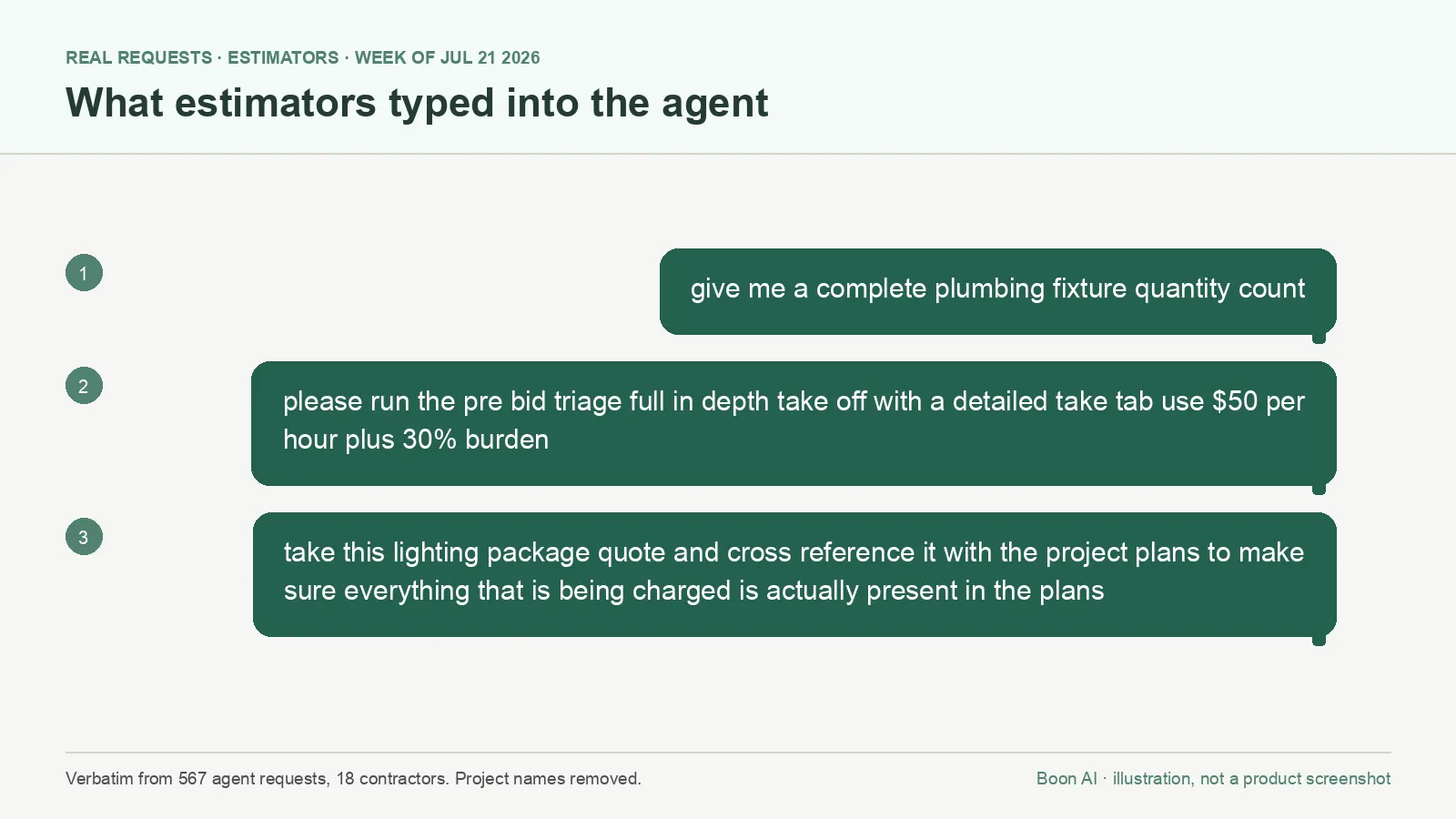
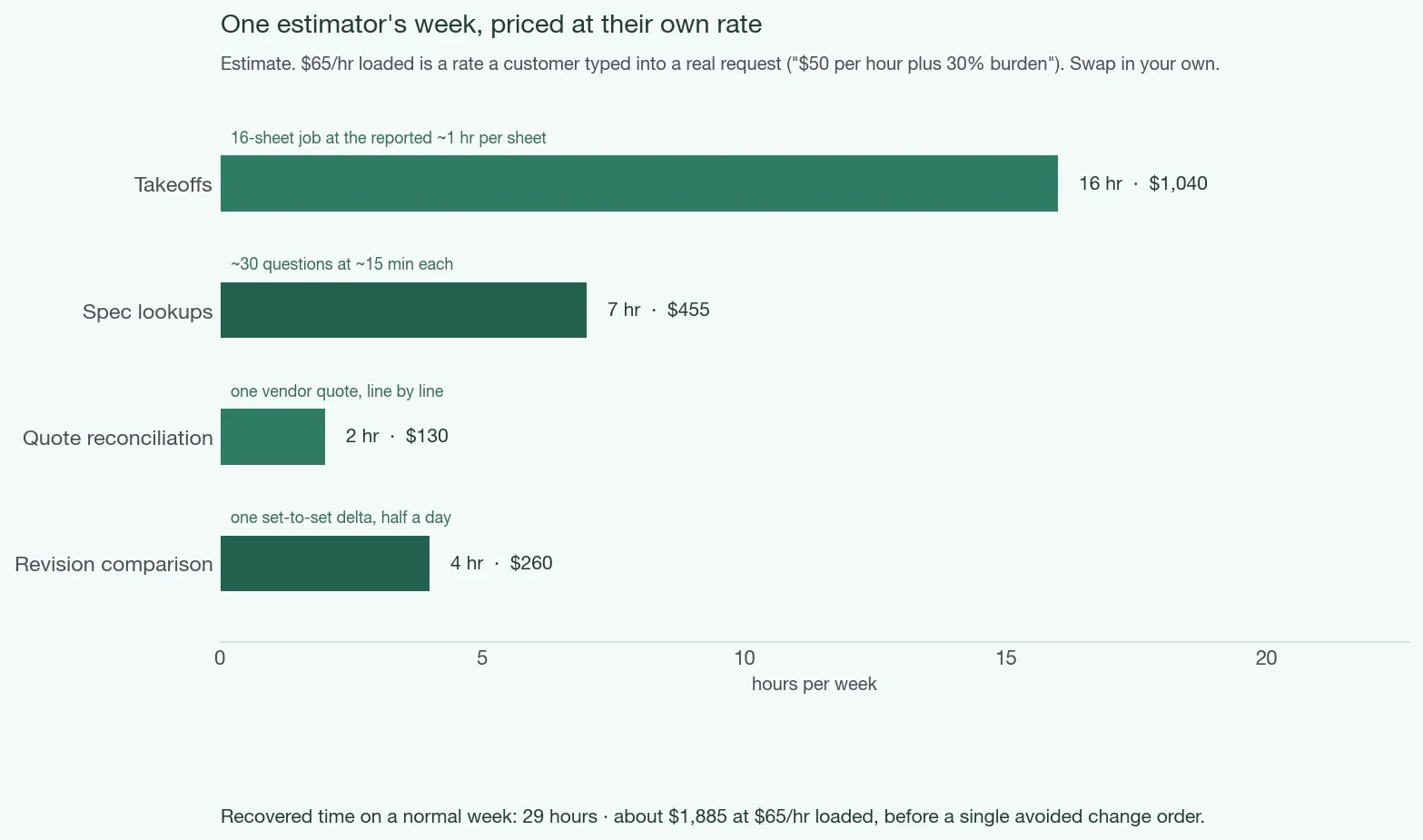
One estimator last week typed their own rate structure straight into a request: “$50 per hour plus 30% burden.” That’s $65/hour loaded, their number, not ours. We’ll use it for the math below, so you can swap in your own and see where you land.
Your takeoff: hours per sheet, not per project
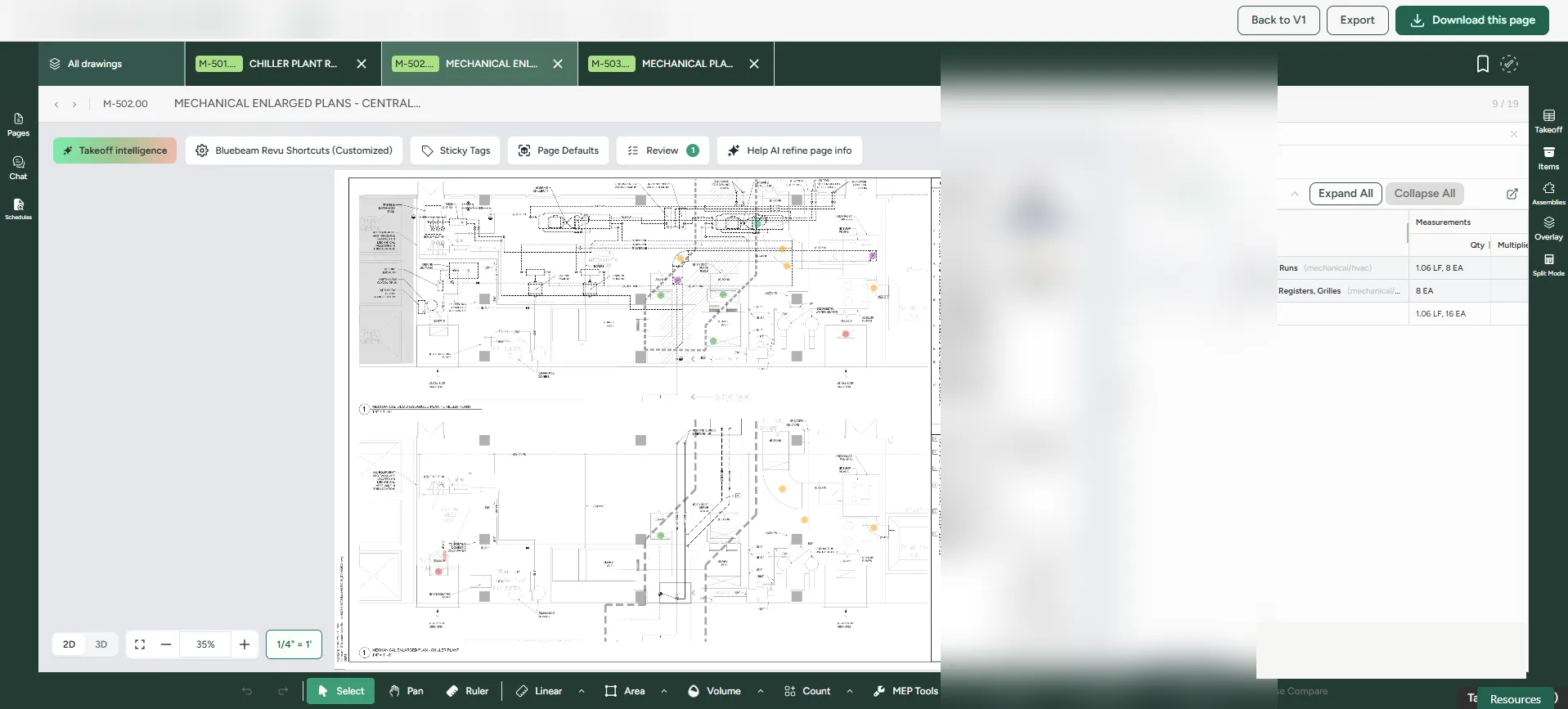
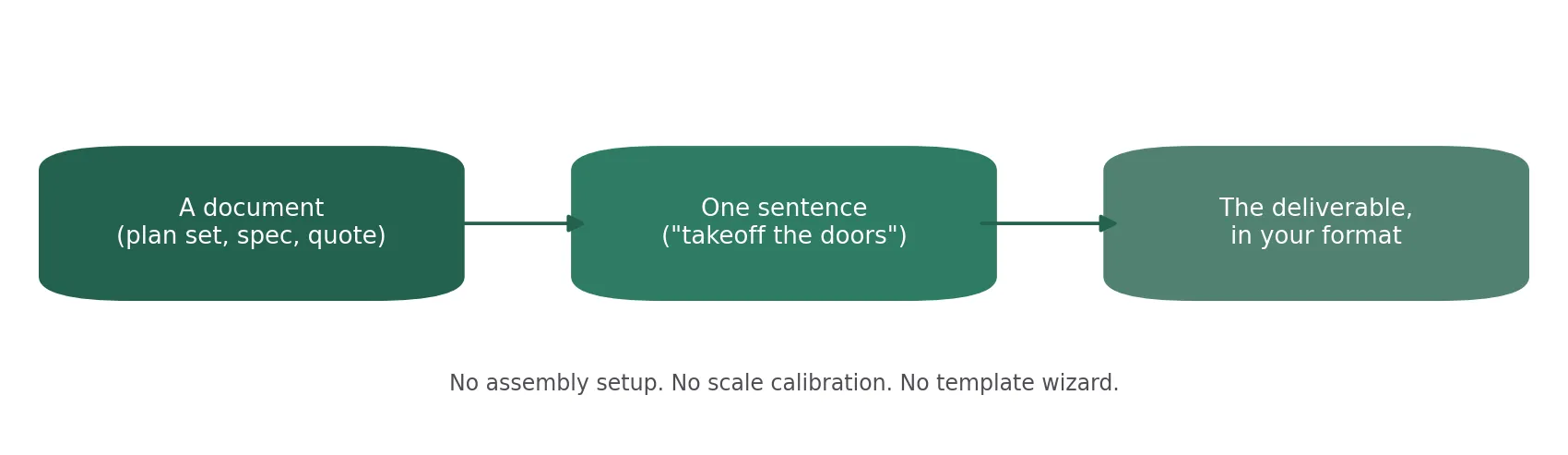
You send the set, you name the trade, you get the count. “Give me a complete plumbing fixture quantity count.” “Takeoff flooring on interior finish sheets.” No assembly setup, no scale calibration, no template to configure first.
What that’s worth, from contractors doing it now:
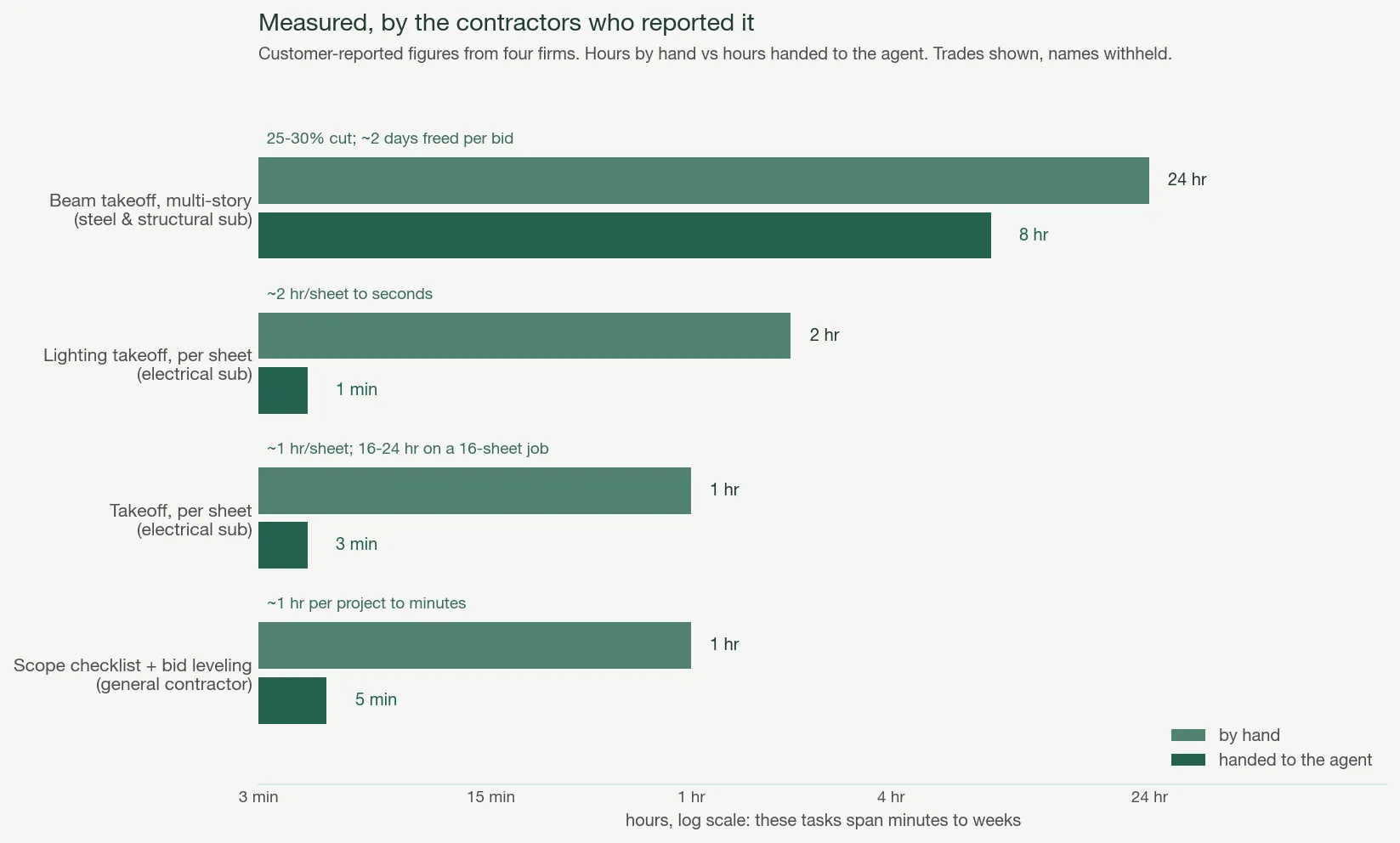
- An electrical sub reports 2-4 hours saved per takeoff, roughly 1 hour per sheet. On a 16-sheet job that’s 16-24 hours. At $65/hour loaded, $1,000-$1,600 back on a single job.
- A steel and structural contractor cut beam takeoffs by 25-30%: manual 3 days down to about 1 day, freeing ~2 days per bid.
- An electrical contractor doing lighting takeoffs went from ~2 hours per sheet to seconds.
- One electrical firm reports a 90% reduction in takeoff time.
The number that matters isn’t the percentage. It’s that 2 freed days per bid is either an earlier night or one more bid in the pipeline, and one more bid is the only one of those that compounds.
Your spec questions: minutes instead of an afternoon
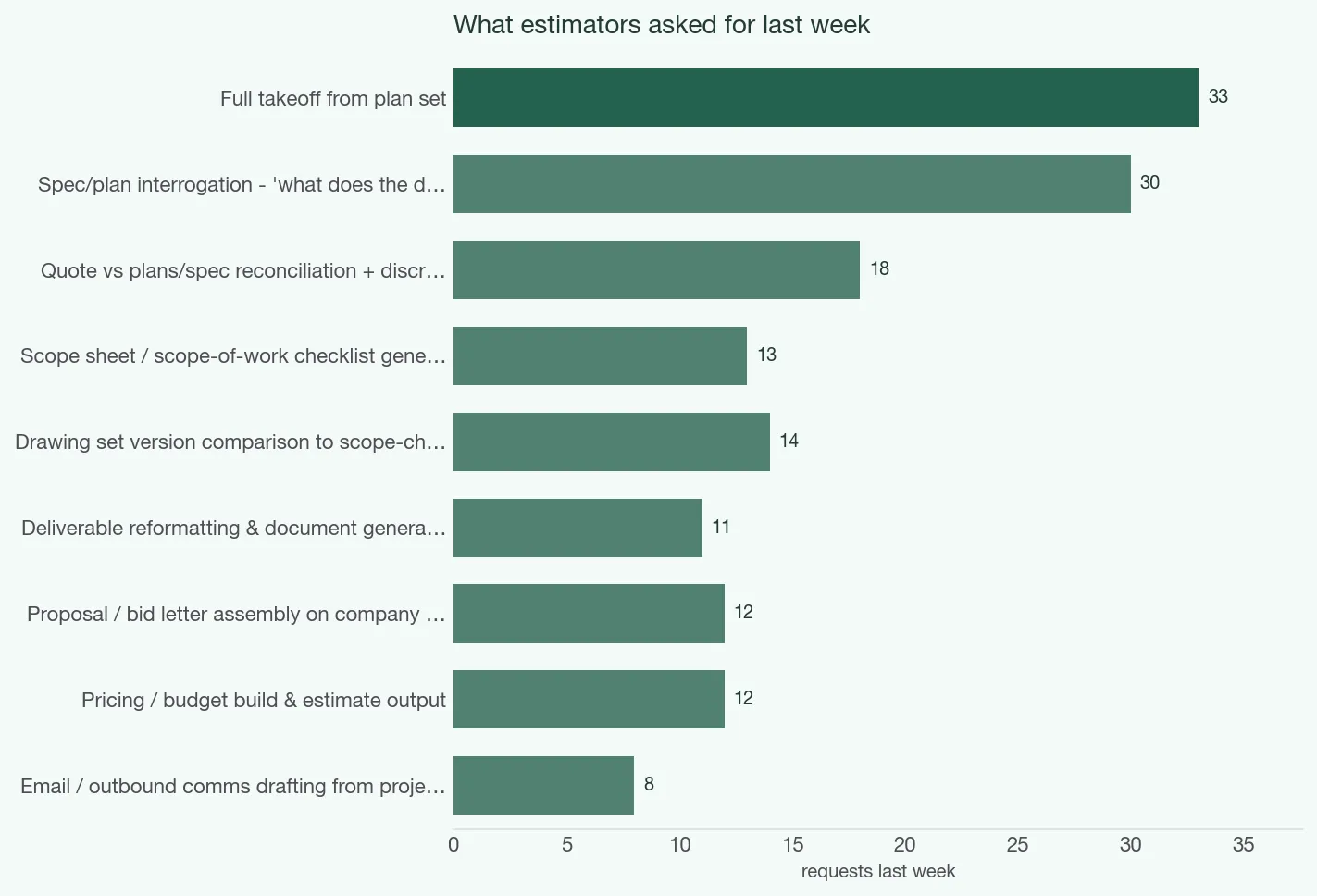
“What PSI concrete is needed for duct banks.” “What grade is required for electrical devices?” “Tell me exactly what will need the anti-graffiti coating.” “What type of ceiling goes with the coffered ceiling?”
Every one of those is a question you’d otherwise answer by scrolling a spec book. Call it 15 minutes each when you actually go look. Thirty of those questions in a week is 7.5 hours, about $490 at a $65 loaded rate.
But the real cost isn’t the scrolling. It’s the times you’re pricing at 11pm against a Friday deadline and you don’t scroll. You assume. The anti-graffiti coating shows up as a change order three months later, and that single miss is worth more than every hour on this page.
Ask instead of assume, get the answer with the page cited, and that whole category of miss goes away.
Your vendor quotes: stop eating scope you didn’t price
This is the one estimators underrate. “Take this lighting package quote and cross reference it with the project plans to make sure everything that is being charged is actually present in the plans.” Then: “Did you see any discrepancies in the products specified versus the products in the quote.” Then: “Compose a word doc clearly explaining any discrepancies you find.”
That last request is the value. The discrepancy list is nice; the document you can send the vendor is what recovers money. Line-by-line reconciliation of a real quote is 2-3 hours you almost never have, so the quote usually gets accepted on trust. One caught line item (a fixture charged that isn’t on the drawings) pays for a month of the software.
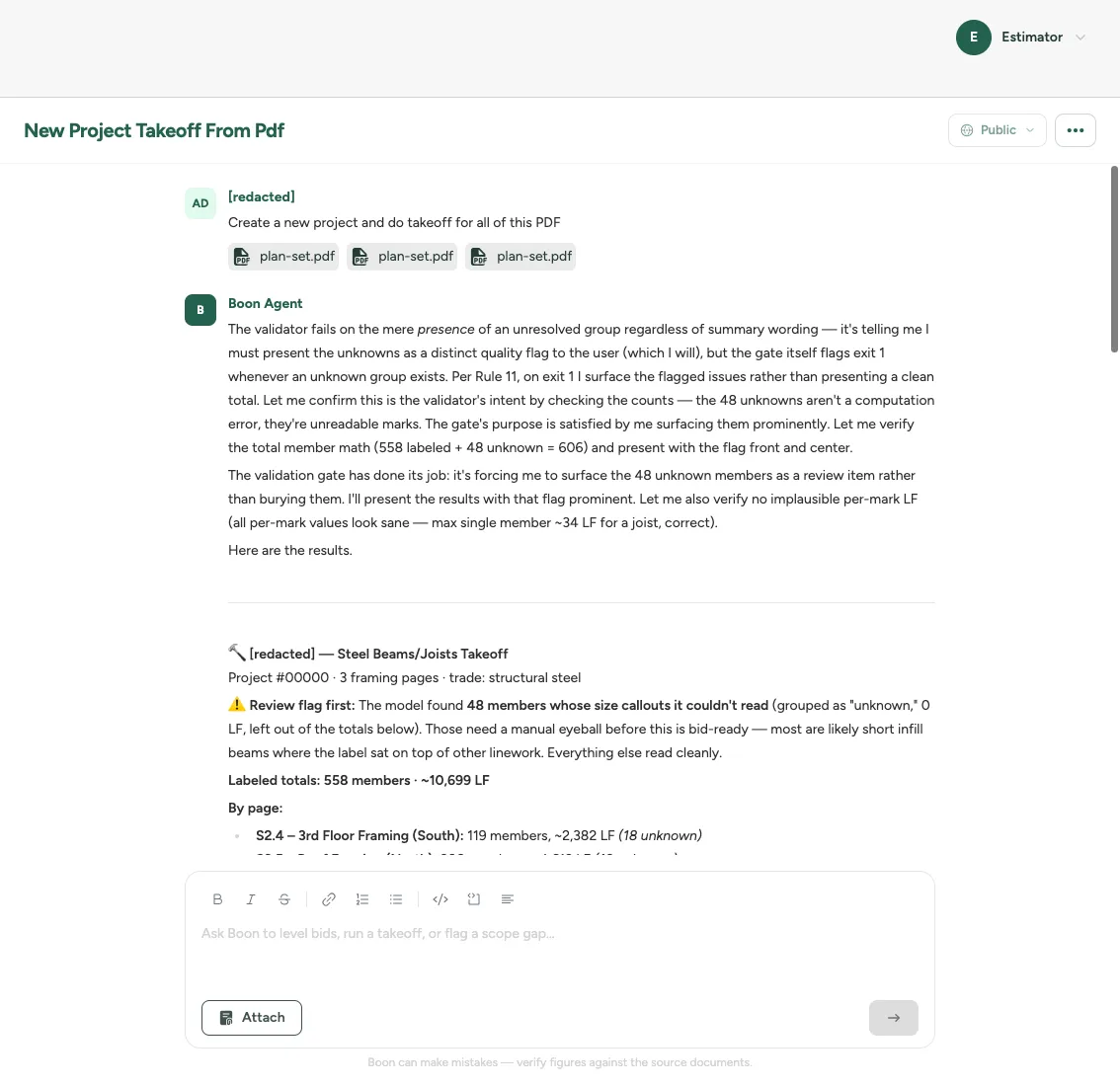
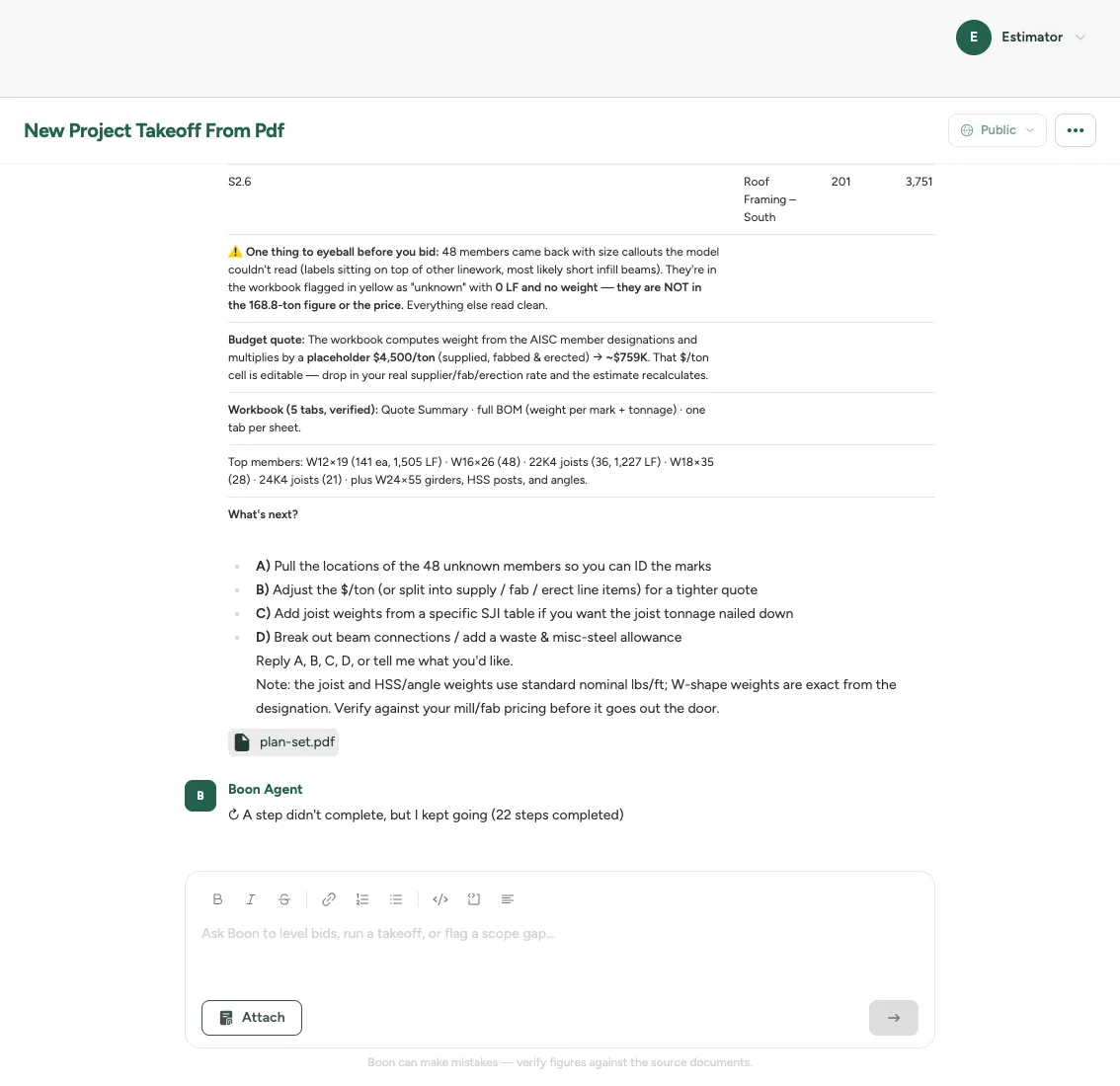
Your revision comparisons: where margin quietly leaves
“What are the differences between the 90% drawings and the IFC drawings.” “Compare the IFC set to the Permit set and give me the scope changes in a spreadsheet.” “Tighten up the take-off per Addendum 2.”
Manual set-to-set comparison runs 4-8 hours and it’s the most miserable work in the job. It’s also where your margin hides: the question is never “what changed,” it’s “what changed that moves my number.”
Note the third request. That estimator already had a takeoff in the thread and asked for it to be updated against the new addendum, and the prior work was still there. You revise instead of restarting, which is the difference between 20 minutes and half a day.
Your format: the deliverable, not the answer
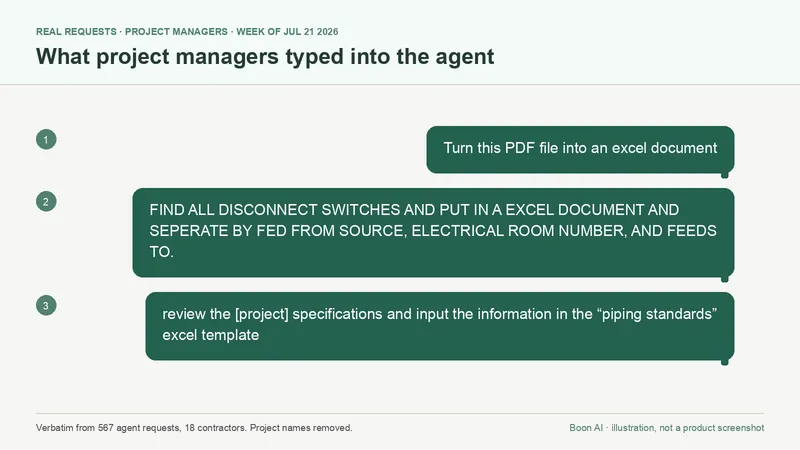
Excel to Word. DFOW format. A downloadable PDF. Spec information dropped into an existing “piping standards” template.
An answer you have to retype into your workbook is half a deliverable. Transcription is 1-2 hours per handoff and it’s pure waste. The analysis was already done. Ask for it in your format and that hour disappears.
What this adds up to
Take the conservative middle of the above on a normal week: 1 hour per sheet on takeoffs, 7 hours of spec lookups, 2 hours of quote reconciliation, half a day on a revision comparison. At $65/hour loaded you’re looking at $1,300-$2,000 a week per estimator in recovered time, before counting a single avoided change order.
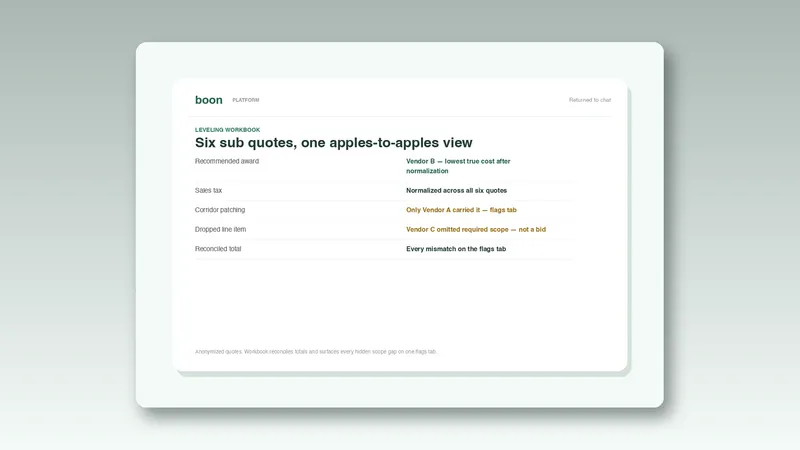
One general contractor now produces scope checklists and bid-leveling summaries in minutes instead of the hour it used to take, saving ~1 hour per project. Another ran a full pre-bid workflow (triage, bid package, spec review) in about 7 minutes, work they estimated at 112-154 hours by hand.
You don’t need to learn a new vocabulary to get this. You send the set, you name the trade, you state your rate, you attach your template. Same sentences you’d use with a junior estimator.
Send us a plan set and pick your worst trade. That’s the whole ask.