I’ve used Bluebeam for 15 years. Here’s why I’m also looking at AI.
That’s not my line. That’s what a VP of Preconstruction told me over coffee at a trade show last fall. He said it like a confession, half expecting me to tell him he was being disloyal to the tool that built his career.
He’s not. And if you’re thinking the same thing, neither are you.
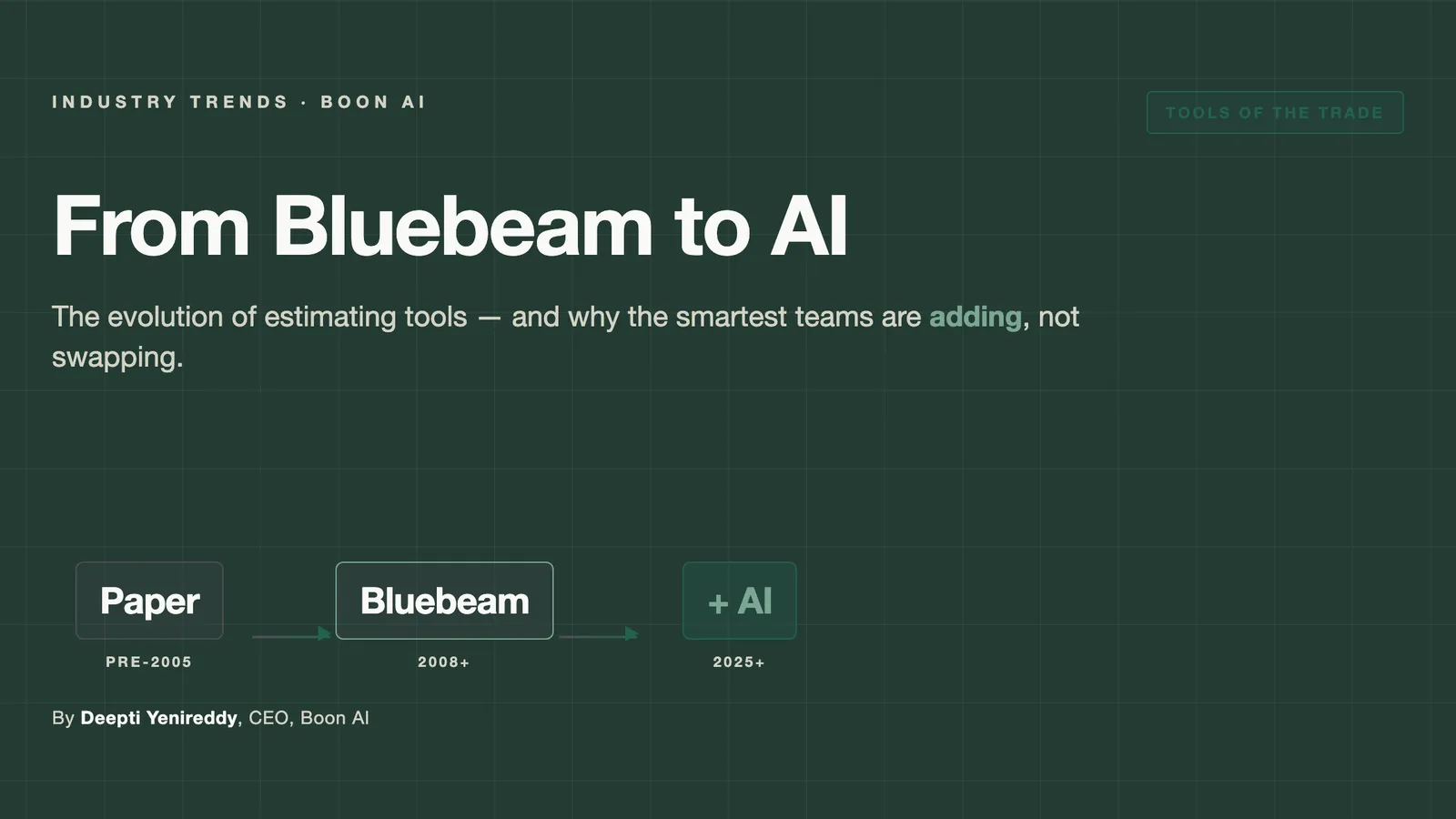
This piece isn’t about replacing Bluebeam. It’s about understanding where the industry has been, where it’s going, and why the smartest estimators are adding new tools to the workbench rather than swapping one for another.
The Paper Era: Where We Started
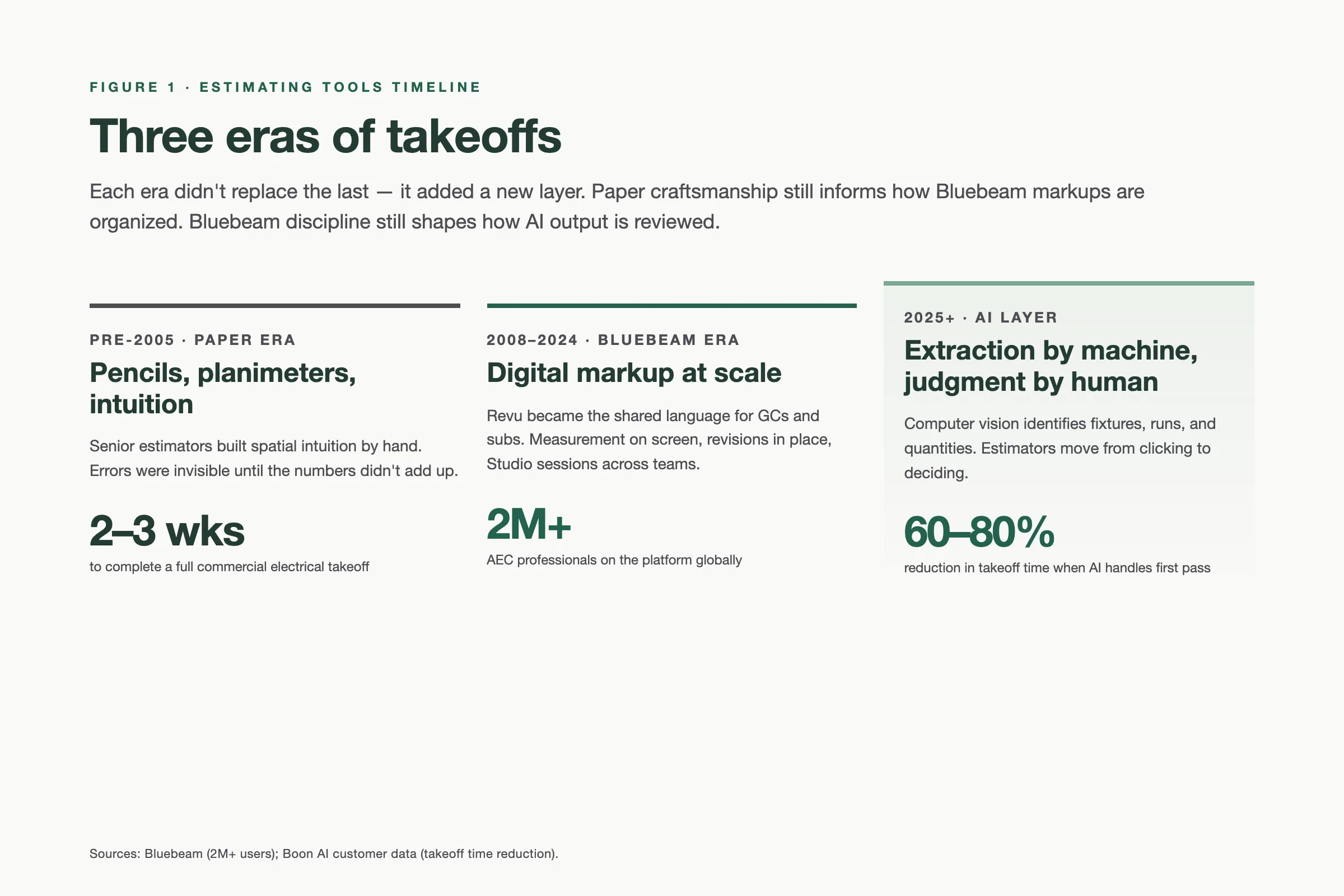
Anyone who started in preconstruction before 2005 remembers the drill. Printed plan sets. Colored pencils. A rolling planimeter or a scale ruler. Counting fixtures by hand, measuring runs with a string on a blueprint, and tallying everything into a spreadsheet that one person understood.
It worked. Estimators developed extraordinary spatial intuition doing takeoffs by hand. They could look at a set of MEP drawings and spot conflicts that wouldn’t surface until construction. That skill came from repetition, thousands of hours with eyes on paper.
But it was slow. A full electrical takeoff on a commercial project could take a senior estimator two to three weeks. Errors were invisible until the numbers didn’t add up. And when drawings got revised, you started over.
The Bluebeam Revolution: Digitizing the Craft
Bluebeam changed the game. Not overnight, but decisively.
When Bluebeam Revu hit its stride in the late 2000s, it gave estimators something they’d never had: digital markup tools designed specifically for construction documents. You could measure on screen. You could count with a few clicks. You could layer markups, share them, revisit them.
According to Bluebeam’s own data , over 2 million AEC professionals now use the platform globally. It became the industry standard because it respected how estimators actually work. It didn’t try to change the process. It made the existing process faster and more trackable.
The shift from paper to digital takeoffs cut estimating time significantly. What took weeks could take days. Revisions went from “start over” to “update the affected areas.” Collaboration went from passing around a rolled-up set of plans to sharing a PDF with live markups.
“Bluebeam saved my career. I went from drowning in paper to actually having time to analyze what I was measuring. That’s when I started catching mistakes before they became change orders.”, Senior Estimator, 25 years in electrical contracting
What Bluebeam Does Well (And Still Will)
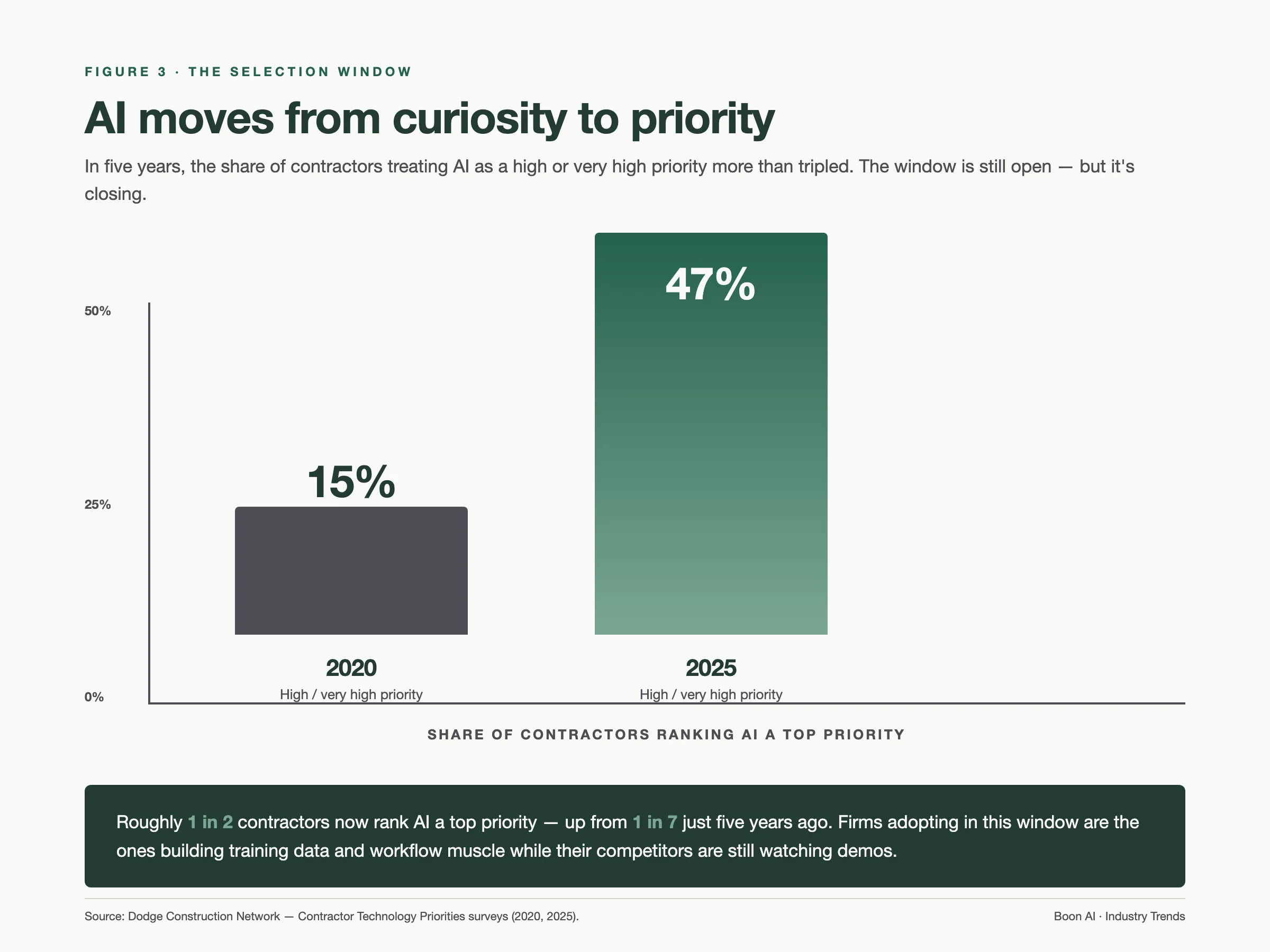
Let me be clear about something. Bluebeam isn’t going anywhere, and it shouldn’t. Here’s what it does that nothing else has replaced:
-
Document management and markup. For reviewing, annotating, and collaborating on construction documents, Bluebeam remains best-in-class.
-
Custom tool sets. Estimators build personalized measurement and counting tools tailored to their specific trade and workflow.
-
Studio sessions. Real-time collaboration on documents across teams and geographies.
-
Industry trust. When a GC sends you a set of plans, they expect Bluebeam markups. It’s the shared language.
The ENR 2025 Top 400 Contractors survey confirms that Bluebeam remains the most widely used takeoff tool among ranked contractors. That installed base isn’t going to disappear.
Where the Gap Appeared
So if Bluebeam is great, what’s the problem?
The problem is volume. And speed. And the fact that preconstruction teams haven’t grown while their workloads have exploded.
Bluebeam digitized the measuring process. It made an estimator faster at measuring. But measuring is still manual. You still click, drag, count, and record. Every line, every symbol, every fixture. One at a time.
For a subcontractor bidding 15-20 projects a month, that manual process creates a hard ceiling. The Associated Builders and Contractors (ABC) reports that the construction industry needs to attract an estimated 439,000 additional workers in 2025 alone to meet demand. At the estimating desk, that shortage means the people you have are doing more with less. Every hour spent on repetitive measurement is an hour not spent on analysis, value engineering, or pursuing the next bid.
“We sat through four AI demo calls last year. We haven’t adopted any of them yet. I keep telling myself I’m being selective, but honestly, I think I’m just waiting for someone to tell me it’s safe.”, VP of Preconstruction, mechanical subcontractor
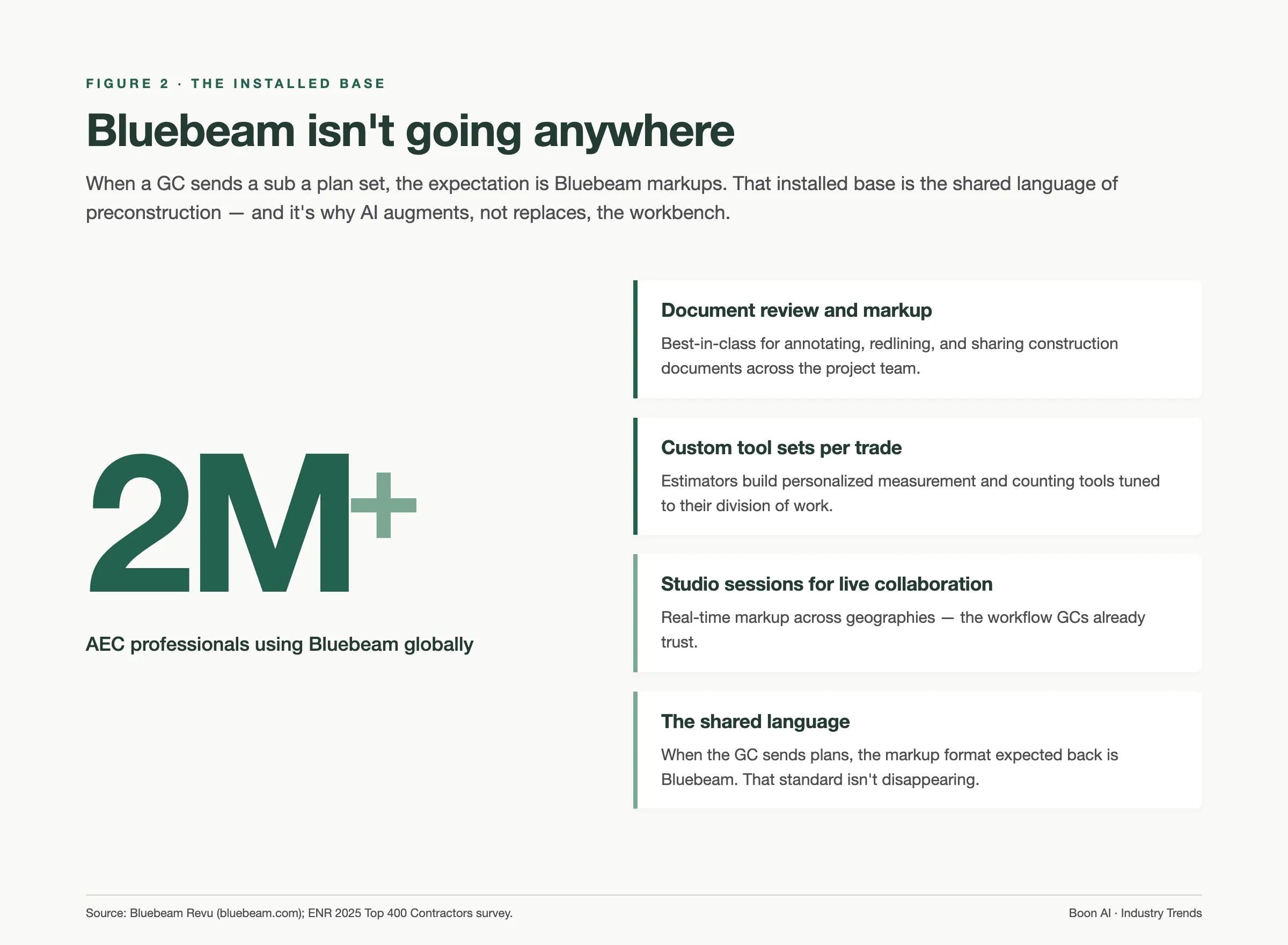
That quote captures something real. The selection window is still open. But it’s closing.
What AI Adds to the Workbench
AI-powered takeoff tools don’t replace the estimator’s judgment. They replace the estimator’s most repetitive task: identifying and quantifying items on drawings.
Computer vision can scan a set of electrical plans and identify receptacles, switches, panels, and conduit runs in minutes rather than days. It can read mechanical drawings and pull pipe lengths, fitting counts, and equipment schedules. It can process structural sheets and calculate concrete volumes and rebar tonnage.
A Dodge Construction Network survey found that 47% of contractors now consider AI and machine learning to be a “high” or “very high” priority for their firms, up from just 15% in 2020. The early majority is arriving.
The key insight: AI handles the extraction. The estimator handles the thinking. That’s not a replacement. That’s a division of labor that lets experienced people spend their time where it matters most.
The Complement, Not the Replacement
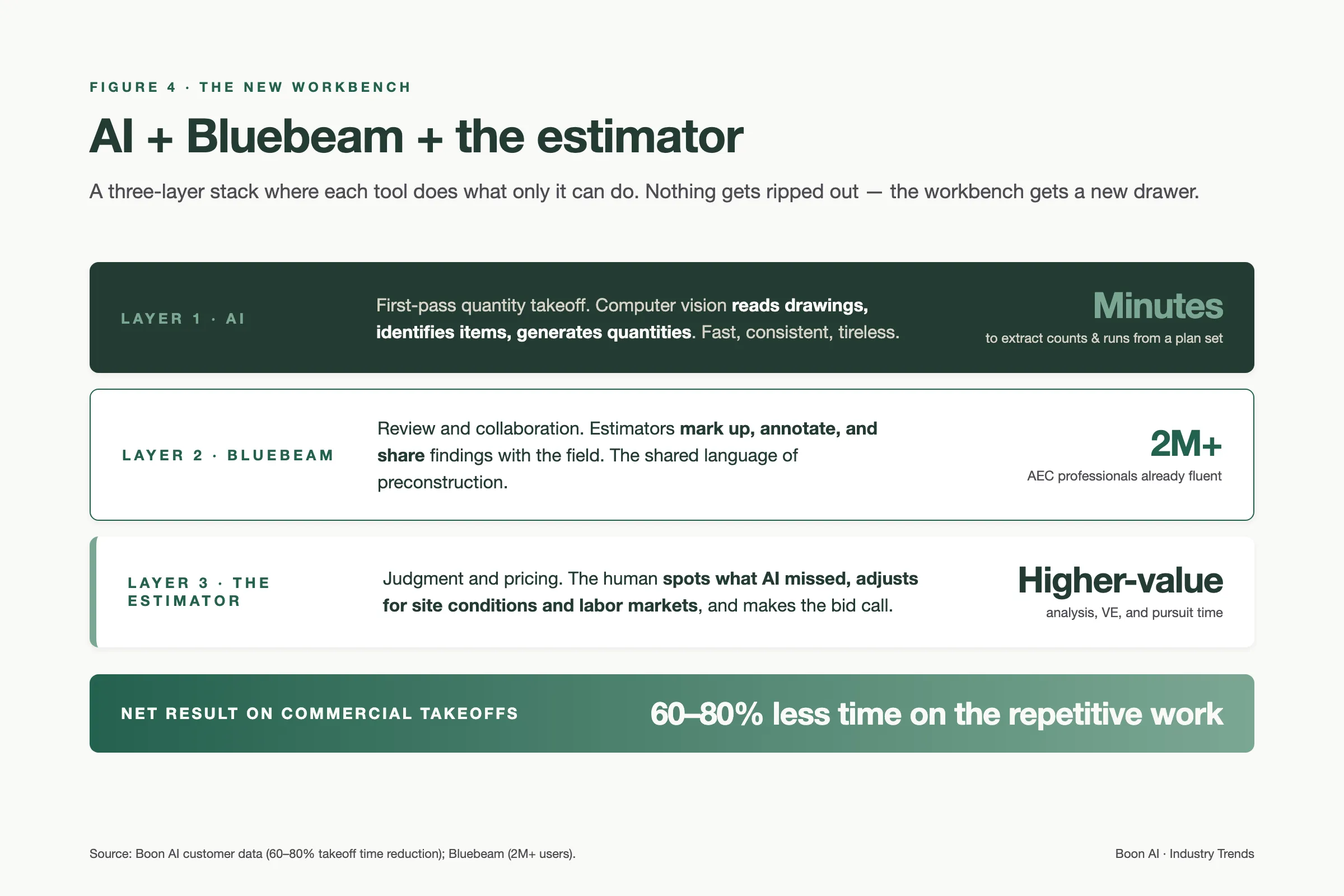
Here’s how I see the stack working for preconstruction teams over the next three to five years:
-
AI handles first-pass quantity takeoffs. It reads the drawings, identifies items, and generates quantities. Fast. Consistent. Tireless.
-
Bluebeam remains the collaboration and review layer. Estimators mark up documents, annotate issues, share observations with the field team.
-
The estimator does what only a human can do. Applies judgment. Spots things the AI missed. Adjusts for site conditions, local labor markets, supply chain realities. Makes the call on pricing.
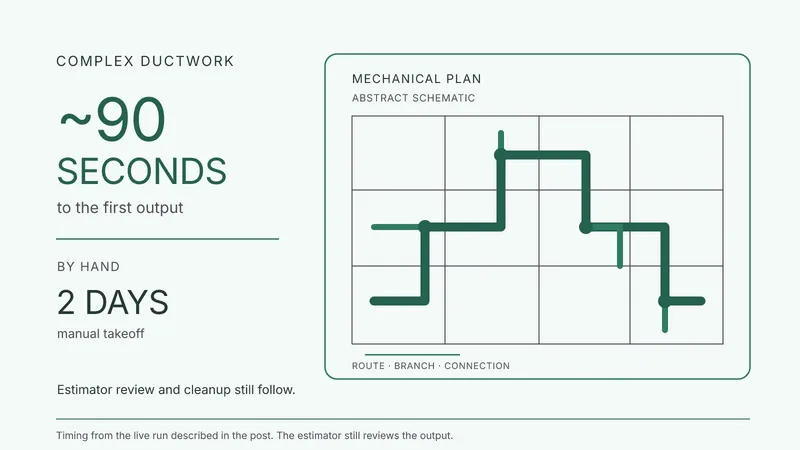
This isn’t theoretical. Firms are running this workflow today. The result: takeoff time drops by 60-80%, bid volume goes up, and senior estimators finally have time to do the high-value analysis they were hired for.
As one contractor told us: “Get rid of that grunt work — that is what I am really looking forward to.”
The Selection Window
If you’ve been watching AI demos and holding off, that’s not a bad strategy. Being thoughtful about adoption is smart. The construction industry has been burned by technology that promised more than it delivered.
But here’s the timing reality. The firms that adopt now are building training data, refining their workflows, and getting their teams comfortable with the tools. By the time everyone else catches up, those firms will be operating at a fundamentally different speed.
The AGC’s 2025 Technology Survey shows that 58% of firms that adopted new technology in the past two years report measurable productivity gains. The question isn’t whether it works. It’s whether you’re going to be in the first wave or the third.
Fifteen years ago, the firms that adopted Bluebeam early had an advantage for a while. Then everyone caught up and it became table stakes. AI is following the same curve, just faster.
The VP I talked to at that trade show made a good point: “I didn’t stop using a tape measure when I got Bluebeam. I just used it less. AI is the same deal.”
He’s right. The tools evolve. The craft endures. The question is just whether you evolve with them.
Sources
Deepti Yenireddy is the CEO of Boon AI, where she works with preconstruction teams to integrate AI-powered takeoff tools into existing estimating workflows. She believes the best technology makes good estimators better, not obsolete.