Wall takeoffs sit at an uncomfortable intersection.
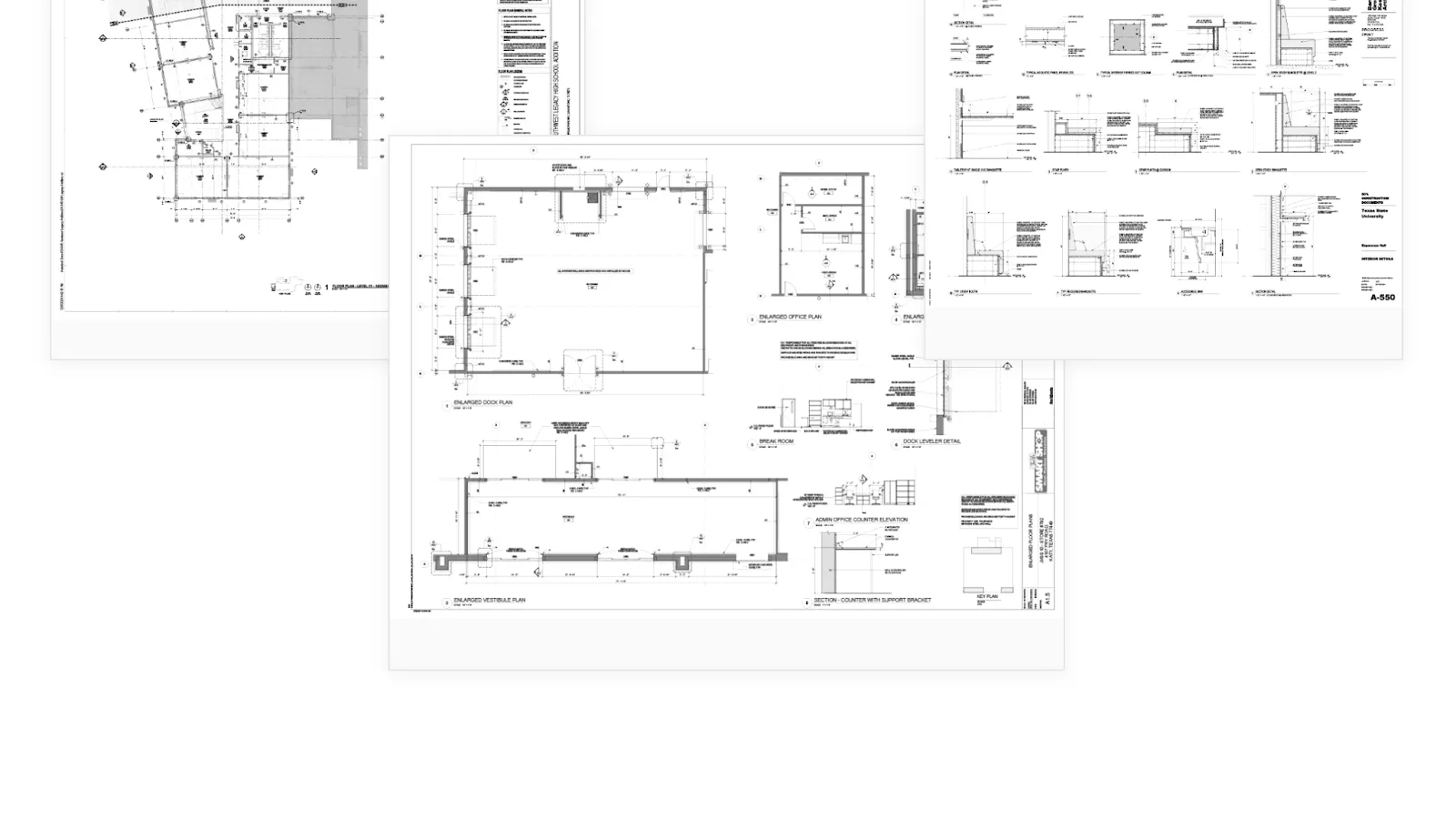
From a distance, they appear mechanical: lines on drawings, types in a legend, quantities in a table. In practice, anyone who’s done them at scale knows they’re shaped far more by interpretation than by geometry.
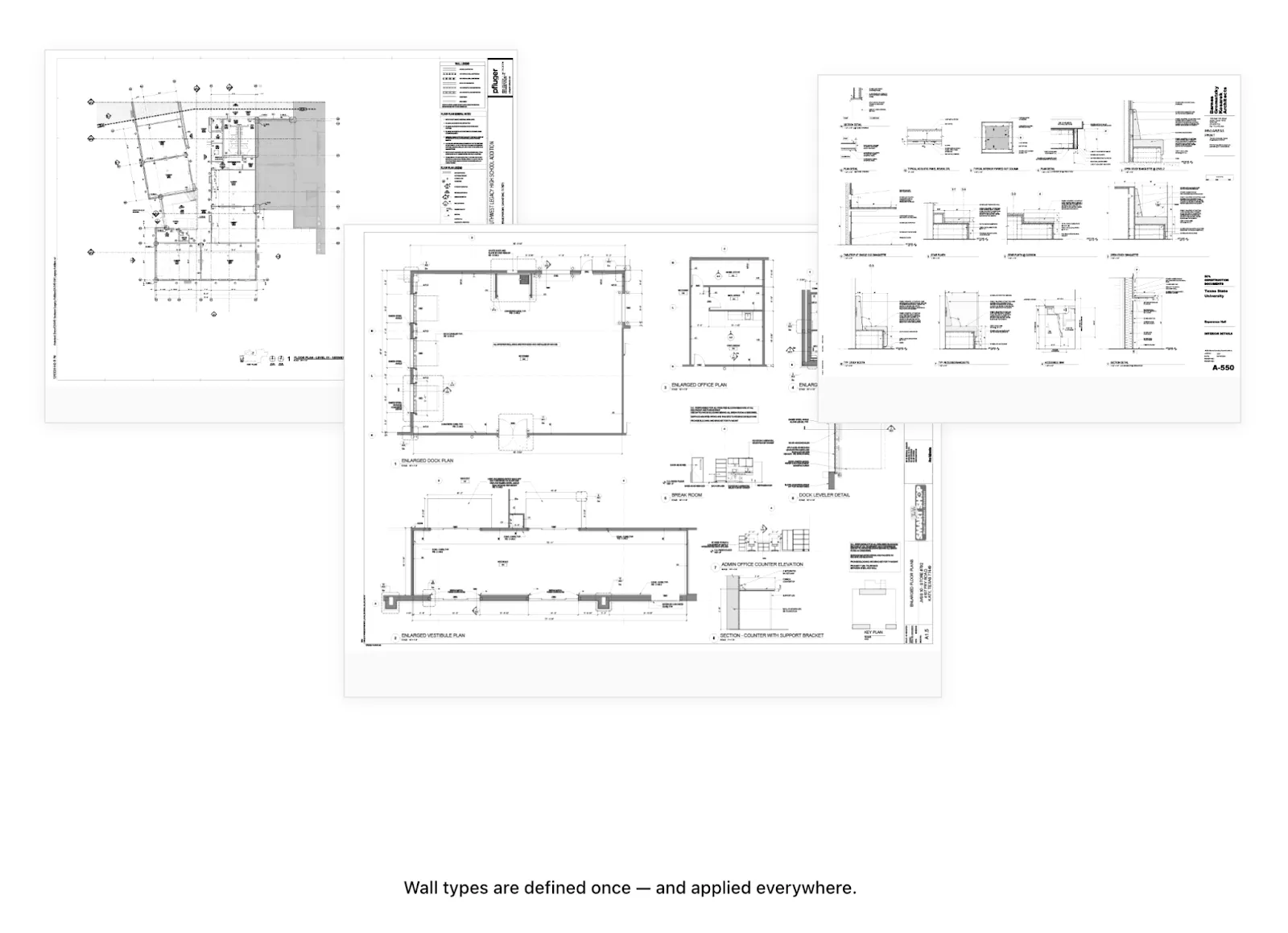
A wall type might be defined once, applied implicitly across dozens of views, modified by notes elsewhere, and quietly overridden by a detail that only applies in one condition. None of these signals are wrong on their own. The difficulty is understanding how they combine, and carrying that understanding consistently across a plan set.
What makes wall takeoffs hard isn’t reading drawings.
It’s maintaining intent as that definition moves across documents, without losing context, judgment, or consistency.
Why “Fully Automatic” Wall Takeoffs Struggle
Many automated approaches implicitly assume that the information needed to classify a wall is local. Close to the geometry itself.
In real plan sets, it rarely is.
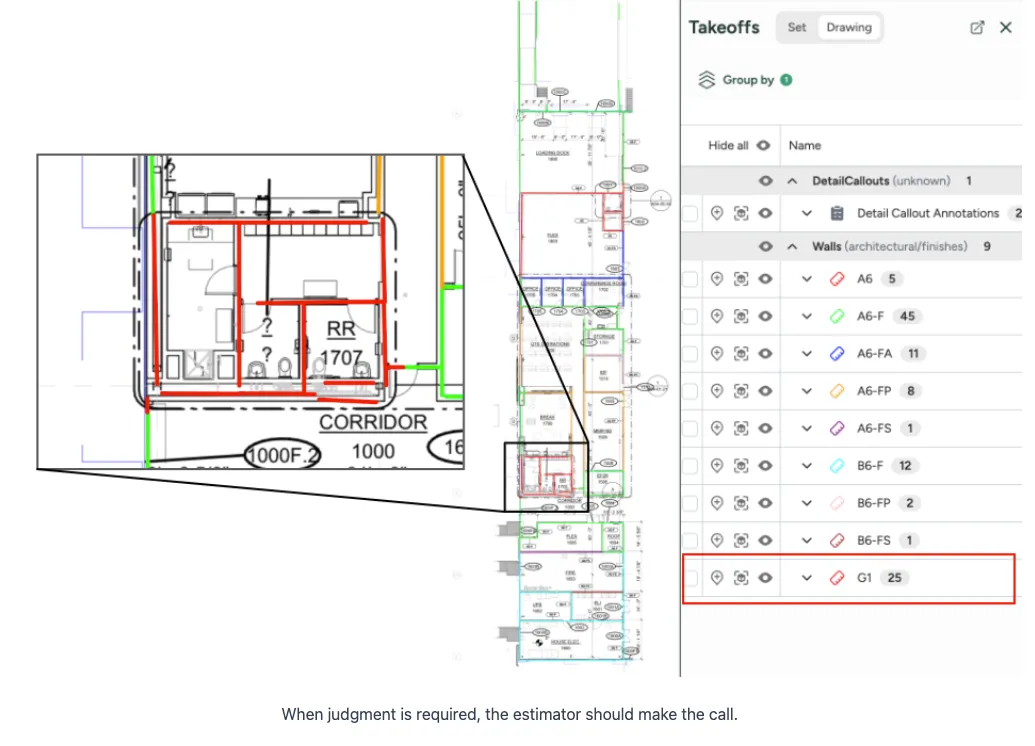
There are moments in every takeoff where judgment is required:
- Legends defined elsewhere
- Implicit conventions
- Notes that apply conditionally
- Exceptions called out far from where the wall is drawn
When systems rely on proximity or pattern matching alone, they often produce confident answers that are subtly wrong. Those errors don’t surface immediately. They compound downstream, where they’re harder to detect and more expensive to unwind.
The issue isn’t accuracy in isolation. It’s that intent is distributed, and most systems aren’t built to preserve it.
Where This Becomes an AI Problem (and Where It Doesn’t)
Problems like wall takeoffs aren’t difficult because drawings are messy. They’re difficult because the information that matters is distributed, conditional, and context‑dependent.
Solving them requires systems that can:
- Carry intent across pages
- Preserve human judgment
- Apply decisions consistently at scale
This is where AI is most effective in preconstruction. Not as a guessing engine, but as infrastructure for managing complexity without losing control.
The goal isn’t to eliminate judgment. It’s to make judgment explicit, reusable, and reviewable.
Judgment Is Not a Failure Mode
There are moments in every takeoff where judgment is required:
- Conflicting notes
- Ambiguous conditions
- Edge cases no system should resolve autonomously
Capturing Intent Once, and Letting It Scale
The real leverage in wall takeoffs isn’t automating every classification.
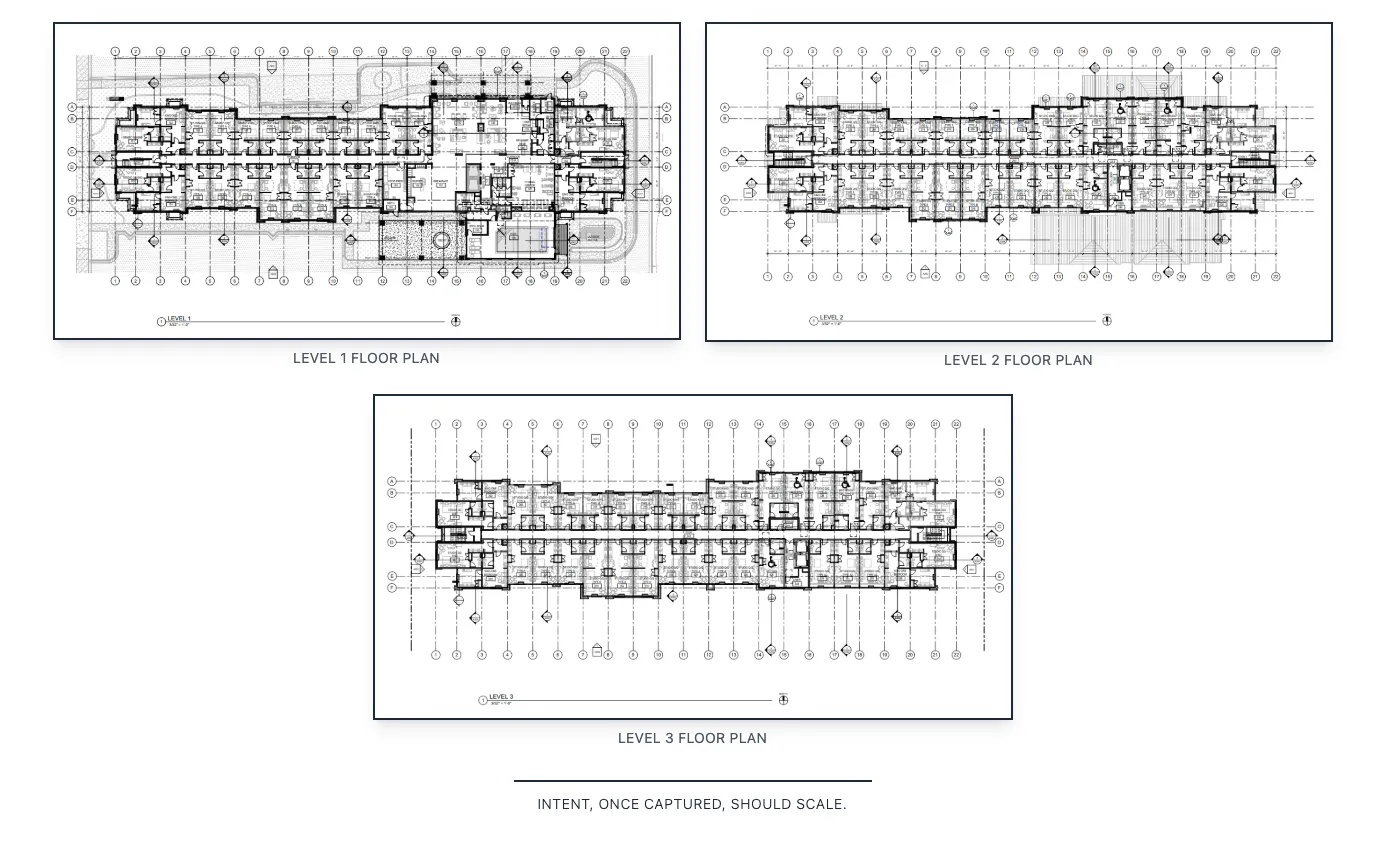
It’s avoiding the need to re‑decide the same thing over and over.
Once an estimator confirms a wall type:
- That intent should persist
- It should apply consistently across the set
- It should scale without reinterpretation
This is where AI quietly does its best work. Not by re‑guessing on every page, but by carrying confirmed intent forward.
Making Failure Modes Explicit
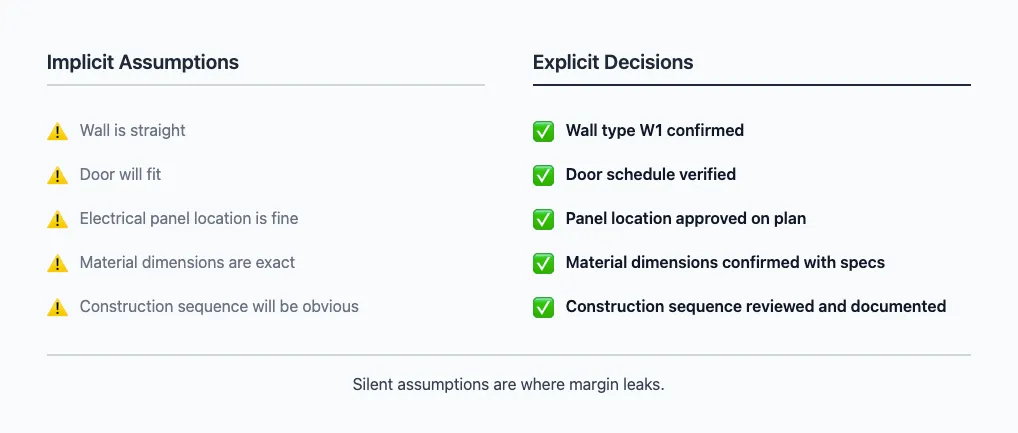
The most expensive mistakes in preconstruction don’t come from visible errors.
They come from silent assumptions.
When systems guess:
- Errors propagate quietly
- Risk surfaces late
- Accountability becomes diffuse
Explicit decisions behave differently. They can be reviewed, challenged, and corrected.
That difference matters.
What This Changes in Practice
Wall takeoffs aren’t just quantities. They’re commitments that flow into pricing, staffing, scheduling, and risk. The objective isn’t perfect automation.
It’s clearer commitments earlier.
When intent is explicit and preserved:
- Estimators spend time where judgment actually matters
- Reviews become faster and more meaningful
- Risk is surfaced before it compounds
That’s where AI delivers real value in preconstruction.

Closing
Wall takeoffs don’t fail because teams aren’t careful. They fail when intent gets diluted as it moves across complex documents. The systems that hold up aren’t the ones that guess better. They’re the ones that preserve context, surface uncertainty, and respect judgment.
That’s the direction we’re building toward. Not automation for its own sake, but infrastructure that makes complex decisions safer to scale.