By Deepti Yenireddy, CEO, Boon AI
A $100M family GC in Indiana just formed an AI committee. Not a technology task force. Not a “let’s look into this someday” note on a whiteboard. A formal committee with a charter, a meeting cadence, and a mandate to report back to ownership on how AI fits into their business over the next three years.
This is a company that built its reputation on handshake deals and field knowledge. They don’t chase trends. They don’t adopt technology because a conference speaker told them to. They formed this committee because their biggest client asked a question during a qualification interview that nobody in the room could answer: What is your technology strategy for preconstruction?
That question is coming for all of us.
The Qualification Package Is Changing
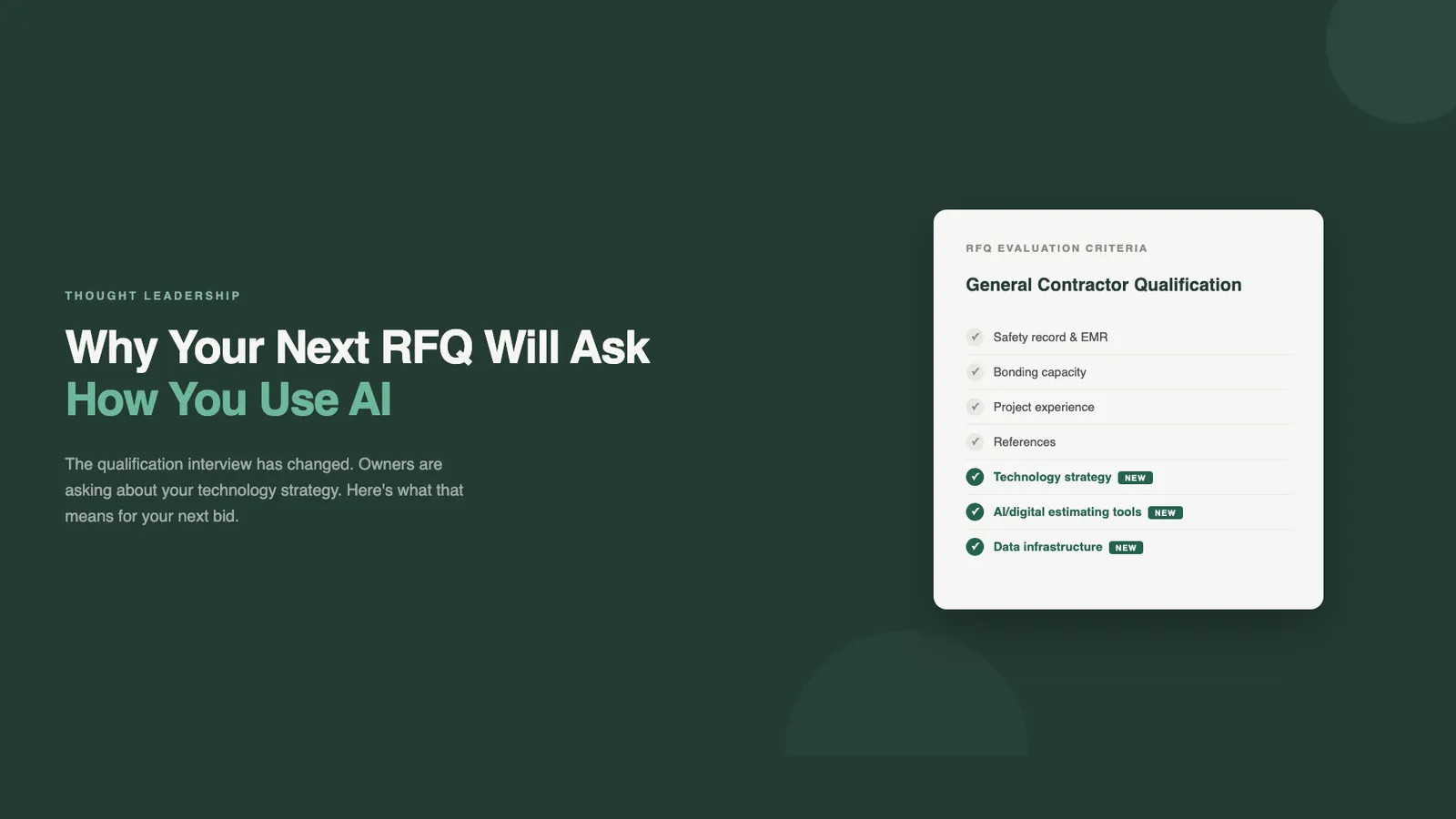
If you’ve submitted an RFQ response in the last 12 months, you may have noticed something new in the evaluation criteria. Alongside the usual sections on safety record, bonding capacity, and relevant project experience, owners and developers are adding questions about technology.
Not generic questions. Specific ones. How do you handle takeoffs? What tools support your estimating workflow? How do you manage document review across trades? What does your data infrastructure look like?
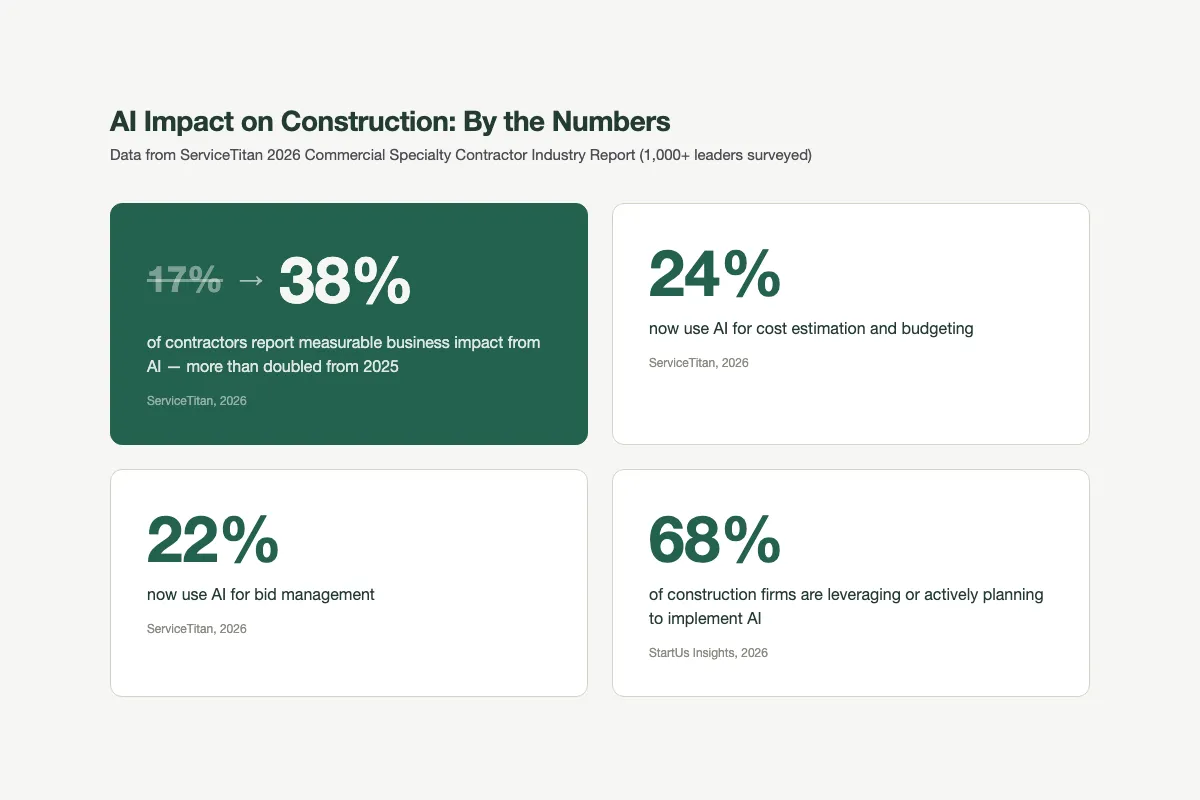
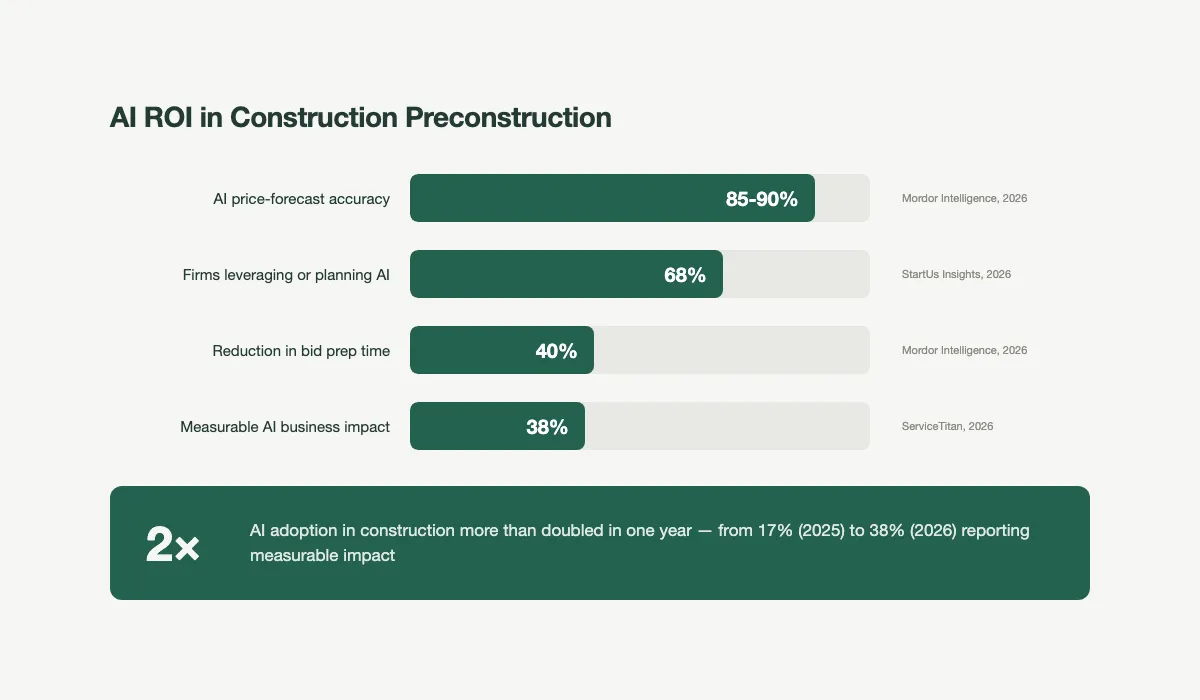
This isn’t hypothetical. ServiceTitan’s 2026 Commercial Specialty Contractor Industry Report, surveying over 1,000 commercial construction leaders, found that 38% of contractors now report measurable business impact from AI, up from 17% in 2025. Contractors are applying AI across cost estimation and budgeting (24%) and bid management (22%). The firms that can articulate this in a qualification interview have a story to tell. The ones that can’t are already losing ground.
“We’ve started asking every GC we shortlist what their technology stack looks like for preconstruction. It’s not a nice-to-have question anymore. It’s a filter.”. VP of Development, regional owner-developer
Why Owners Care Now
Owners aren’t asking about technology because they’re impressed by AI. They’re asking because they’re tired of paying for the problems that come from not using it.
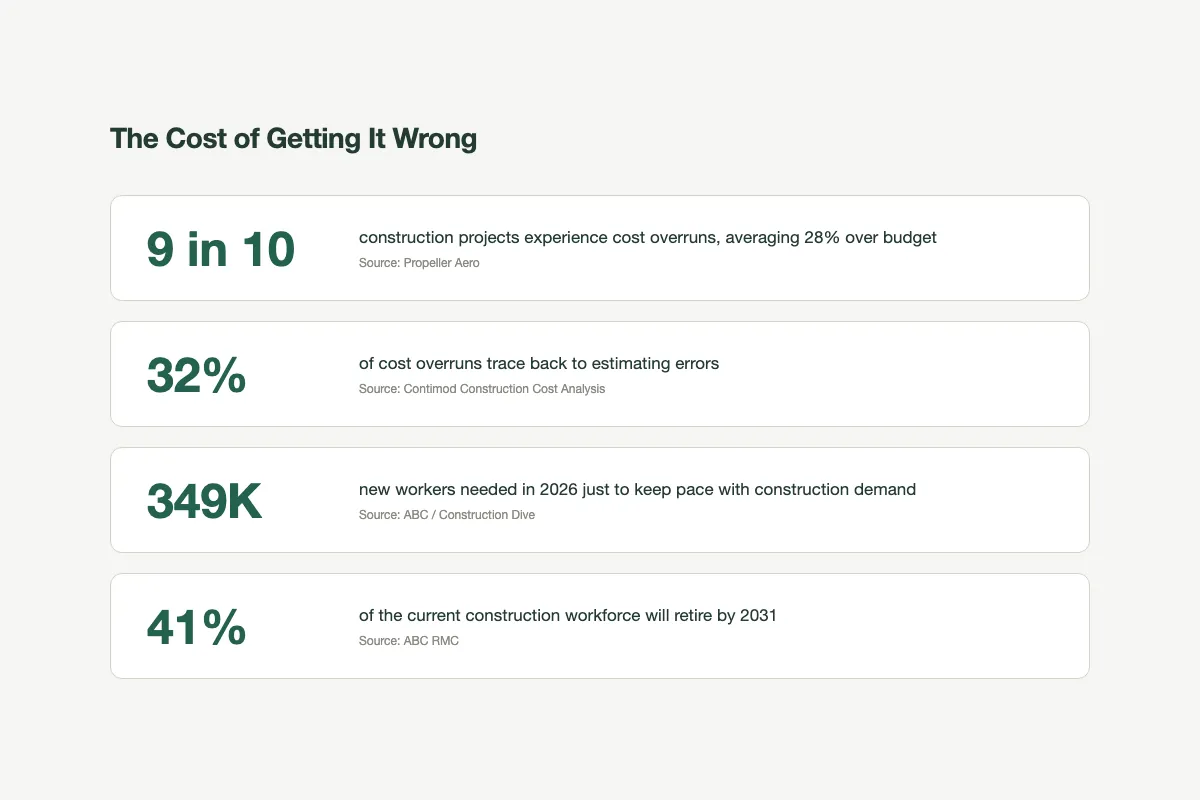
Nine out of ten construction projects experience cost overruns, with an average overrun of 28%. When 32% of those overruns trace back to estimating errors, owners start connecting dots. They’re not asking “Do you use AI?” because it sounds modern. They’re asking because they want to know whether your preconstruction process has safeguards against the errors that blow up their budgets.
The construction industry needs to attract 349,000 new workers in 2026 just to keep pace with demand. An estimated 41% of the current workforce will retire by 2031. Owners know this. They’re asking themselves: can this contractor still deliver when their senior estimator retires next year? Technology strategy is becoming a proxy for operational resilience.
The Shortlist Squeeze
Here’s what’s happening in practice. An owner puts out an RFQ. Eight GCs respond. Three have a clear technology narrative: they can describe how they use digital tools in estimating, how they’ve reduced takeoff time, how they handle spec review. Five have strong project histories but describe their preconstruction process the same way they would have in 2015.
The three with the technology story make the shortlist. The five without it don’t.
This isn’t because technology is the most important factor. It’s because it’s become a differentiator in a market where everyone has good safety records and solid references. When the baseline qualifications are equivalent, the tiebreaker has shifted.
“I’m thinking three years out. When technology has totally changed this business, I want to be the company that’s already there, not the one scrambling to catch up.”. President, growing specialty subcontractor
What a “Technology Story” Actually Looks Like
You don’t need to be running a proprietary AI lab. Owners aren’t looking for science projects. They’re looking for evidence that you’ve thought about this and taken concrete steps.
A credible technology story includes:
- A defined process. You can describe how technology fits into your estimating workflow, not as a bolt-on, but as part of how your team actually works.
- Measurable results. You can point to specific improvements: faster takeoffs, fewer errors, more bids pursued per quarter.
- A plan for what’s next. You’re not just using tools. You have a perspective on where your technology strategy is headed.
The bar isn’t perfection. It’s intentionality. Owners want to see that you’re paying attention and making deliberate choices about how you work.
According to Mordor Intelligence’s 2026 report, AI-enabled estimating platforms now deliver 85-90% price-forecast accuracy and trim bid preparation time by up to 40%. Firms that have adopted these tools don’t just work faster. They bid smarter. They pursue the right projects. They protect margins.
The AI Committee Next Door
Back to that family GC in Indiana. They didn’t form their AI committee because a vendor pitched them. They formed it because their 28-year-old project engineer came back from a conference and said, “Every GC I talked to is doing something with AI. We need to figure out where we stand.”
That’s the dynamic now. It’s not top-down mandate. It’s market pressure bubbling up from every direction: from owners in qualification interviews, from competitors at industry events, from younger team members who expect modern tools.
68% of construction businesses are either already leveraging or actively planning to implement AI technologies. That’s not a bleeding edge. That’s a majority. If you’re not in that group yet, the question isn’t whether you’re behind. It’s whether the owners you bid for have noticed.
“The owners we work with are getting more sophisticated about what they expect from us on the technology side. It’s not enough to just have good field teams anymore. They want to know you’re running a modern operation.”. Estimating director, mid-market GC
What This Means for You
If your last RFQ response didn’t include a section on technology, it’s time to add one. If your qualification interview didn’t touch on how you handle preconstruction digitally, prepare for that question next time. It’s coming.
This isn’t about adopting AI for the sake of it. It’s about being ready to answer a simple question from the people who give you work: How are you keeping up?
Your competitor just formed an AI committee. The owner you bid for noticed.
Deepti Yenireddy is the CEO and founder of Boon AI, a platform built for construction preconstruction teams. She writes about the trends shaping how contractors win and deliver work.