Every preconstruction team has a quiet tax it pays on every bid, and most of them have stopped noticing it. It’s the hours spent reading. Page by page through a spec book, hunting for the inspection requirement buried in Division 1, the third-party commissioning clause that should sit with the owner, the subcontractor pre-qual language that nobody will catch until it’s a change order. The work that drives errors into bids precisely when there’s no time left to do it carefully.
At Guido Construction, that tax landed on Ted Zimmerhanzel, VP of Preconstruction. Three days a bid, by hand, just to read the spec book — and even Bluebeam keyword search only cut it to a full day of sorting.
Guido is a mid-market general contractor running three to four bids a month across a four-estimator team. Ted owns Division 1 spec analysis on every active project — the cross-referencing that holds a bid together. Three days a bid, by hand. This is the story of what happened when those three days became minutes.
The old way: days lost to manual cross-referencing
Before Boon, every bid meant the same manual pass. Find the inspections, the testing, the third-party commissioning. Surface the subcontractor pre-qualification clauses buried in the specs. Reconcile the estimate against the latest plans, the early-purchased equipment against the current revisions. Build the submittal logs out by division. None of it is hard. All of it is slow, and all of it competes for the same senior hours the firm needs on the bids it has already committed to win.
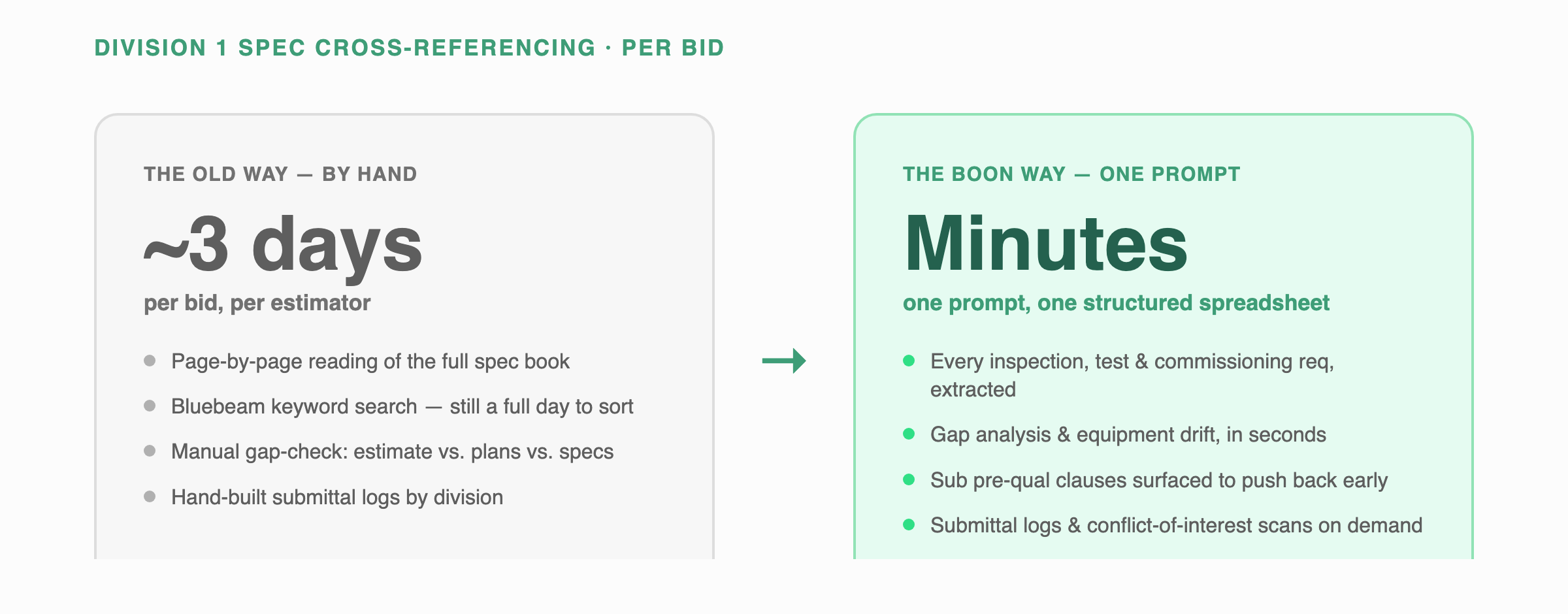
So a team like Guido’s rations its own attention. The careful pass happens when there’s time, and gets compressed when there isn’t. The compression is where the errors live.
The Boon way: one prompt, one spreadsheet
Guido deployed Boon Agent into a dedicated, secure workspace and pointed it at the workflows that used to eat the week:
- Spec extraction — every inspection, test, and third-party verification, sorted and structured in a single output.
- Gap analysis — estimate vs. plans, equipment vs. current specs, in seconds.
- Subcontractor pre-qual extraction — surfaces the clauses that let estimators push back on owners early.
- Submittal logs by division — generated on demand.
- Conflict-of-interest scans — flags commissioning scope that should sit with the owner, not the GC.
The pre-qual extraction is the one Ted keeps coming back to. When the agent surfaces a clause demanding, say, twenty years of experience from an AV subcontractor, that’s not a line item — it’s leverage. It’s a question Guido can put to the owner before the number is locked instead of eating the cost after.
“It gives us the power to ask those questions early on.”
Ted Zimmerhanzel, VP Preconstruction, Guido Construction
The math the firm actually feels
One bid going from three days to minutes is a good story. The week it adds up to is the real one.
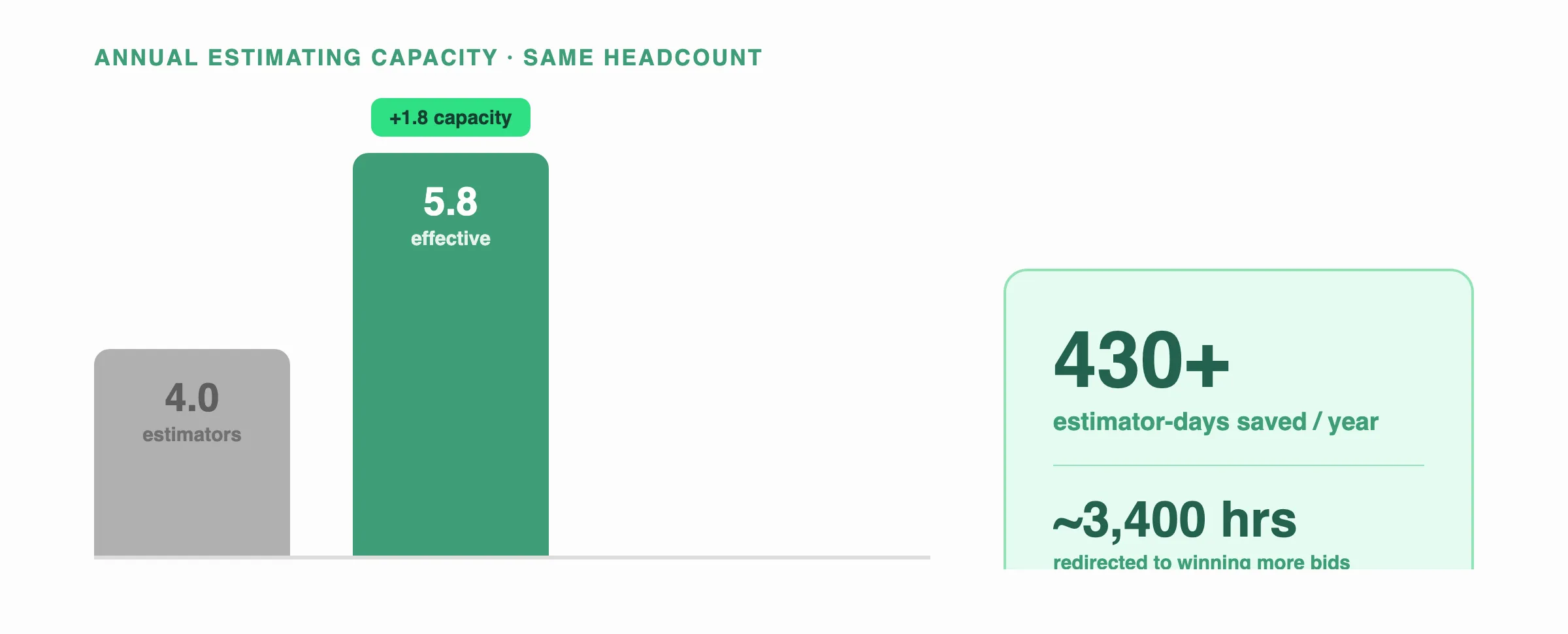
Four estimators, three to four bids a month, roughly two and a half to three days saved on each. That’s about thirty-six estimator-days handed back to the team every month — and around 430 over a year. Against a normal estimator work-year, that’s nearly two full-time estimators of capacity the firm now has without posting a job.
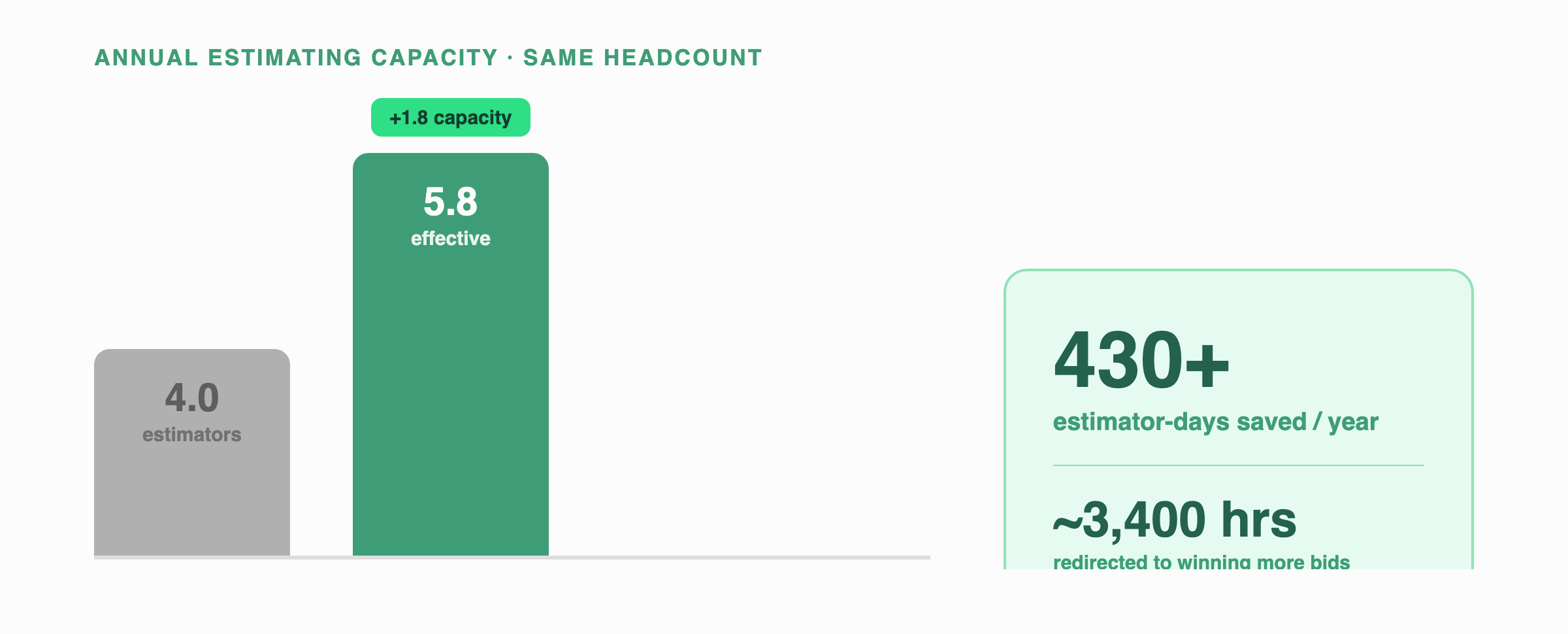
That capacity doesn’t disappear into the calendar. It turns into more bids answered, sharper margins on the bids already in flight, and a preconstruction team that gets to spend its judgment on the work that wins jobs instead of the reading that delays them.
The hours were never the point. What Guido bought back is the room to do the work well.